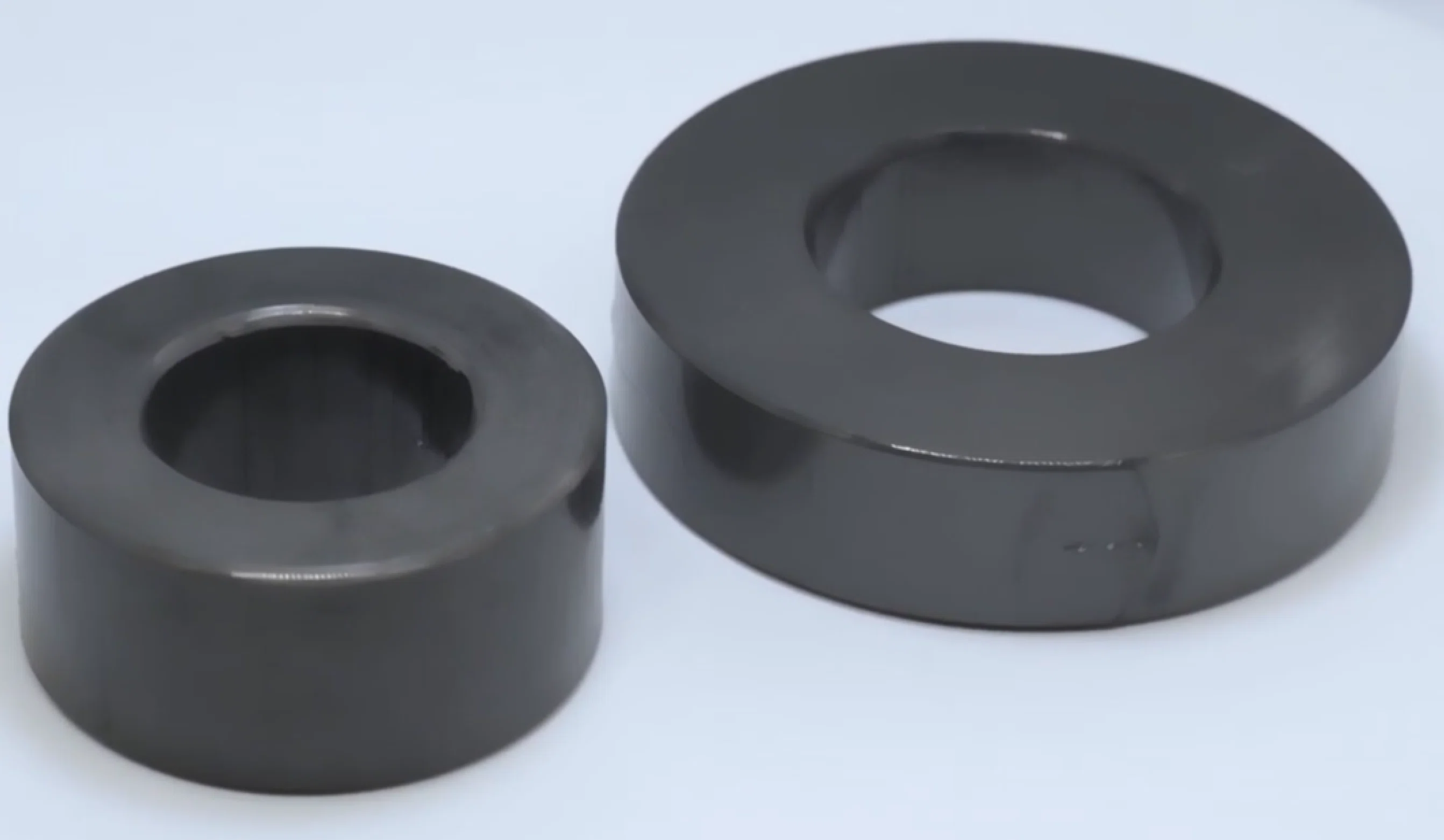
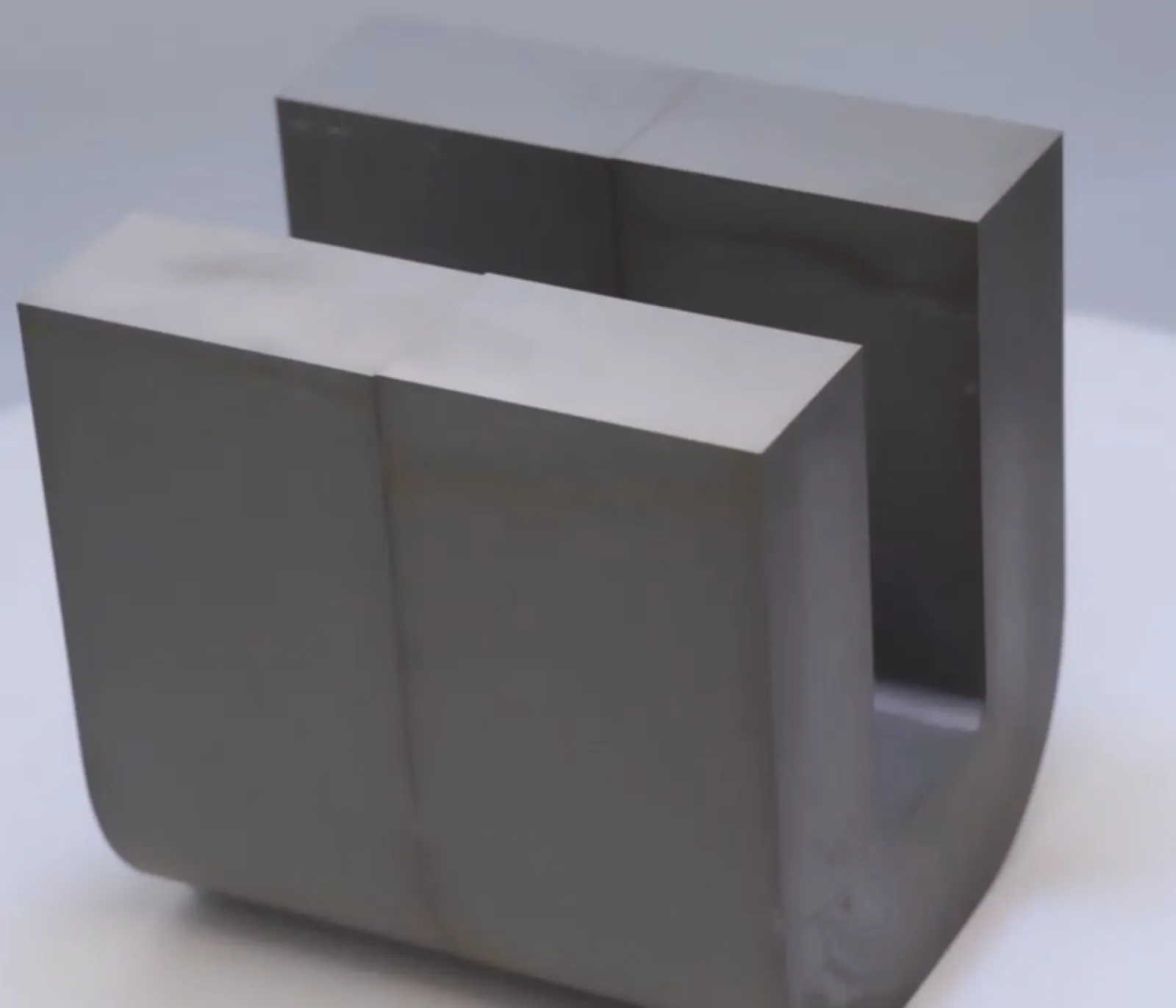
How to size a transformer core: turns, area and flux
For a sinusoidal transformer, the core cross-section and turns are linked by E = 4.44 · f · N · Bmax · Ae. Pick Bmax below saturation (typically 1.6–1.8 T for silicon steel), choose Ae from the power level, then solve for N.
The formula
E = 4.44 × f × N × Bmax × Ae (E in volts RMS, f in Hz, Bmax in tesla, Ae in m²).
Turns: N = E / (4.44 × f × Bmax × Ae).
Core area from power: Ae ≈ √(P / (K × f × Bmax × J × Kw)), with K a topology constant, J current density, Kw window fill factor.
Worked example
A 1 kVA, 230 V, 50 Hz transformer with Bmax = 1.7 T and Ae = 25 cm² (0.0025 m²) needs N = 230 / (4.44 × 50 × 1.7 × 0.0025) ≈ 244 turns on the primary.
Choosing Bmax
Silicon steel saturates near 2.0 T but loss rises steeply; 1.6–1.8 T is typical for continuous duty. Lower Bmax means more turns and copper, higher Bmax means more loss and noise.
Loss check
Core loss P = k · f^α · B^β (Steinmetz). Use the manufacturer curve at your Bmax and f; add copper loss I²R to estimate temperature rise.
FAQ
What if I only know the inductance I need?
For a core with known AL value, N = √(L / AL). If the core is gapped, ask us for AL at the intended gap.